 ®
Hundreds of spots just to try
A conventional videotron deal asks for a large daily minimum before you can test a single idea.
Our mission is simple: make public screens open to anyone. Airtime is sold by the play, every airing is recorded by the machine, and the audience is counted by cameras. One system serves the market that buys airtime, the media owners who air it and the platform that keeps both accountable.
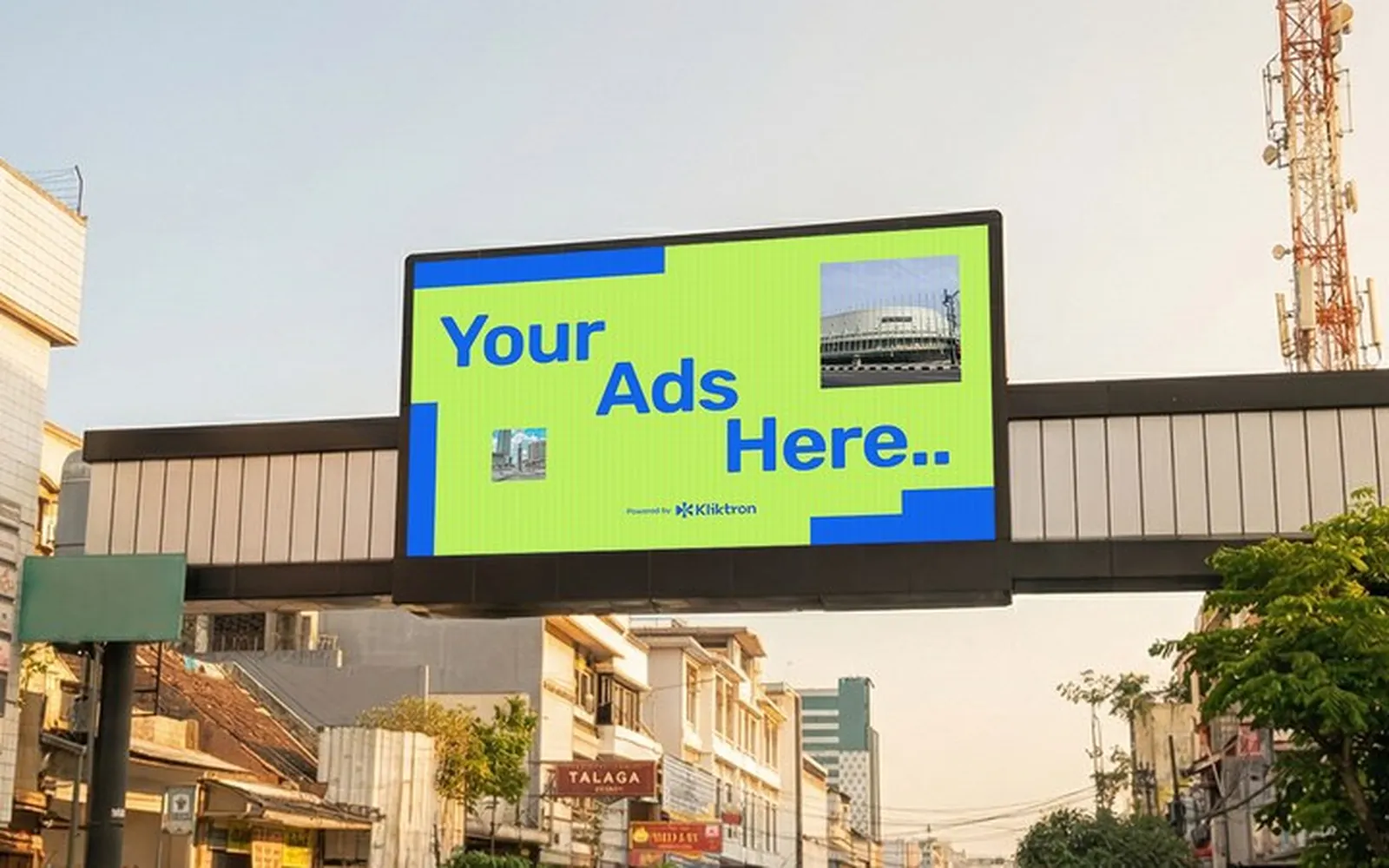
Four problems held public screens back. Each one is a gap the platform was built to close.
A conventional videotron deal asks for a large daily minimum before you can test a single idea.
Proof usually means a photo and a manual report, not a record a machine wrote and anyone can check.
Without fleet monitoring, operators learn about a failing screen from the complaint.
A location is sold with a story about the crowd instead of a counted number.
Each job answers one of the four problems, and all four share the same record.
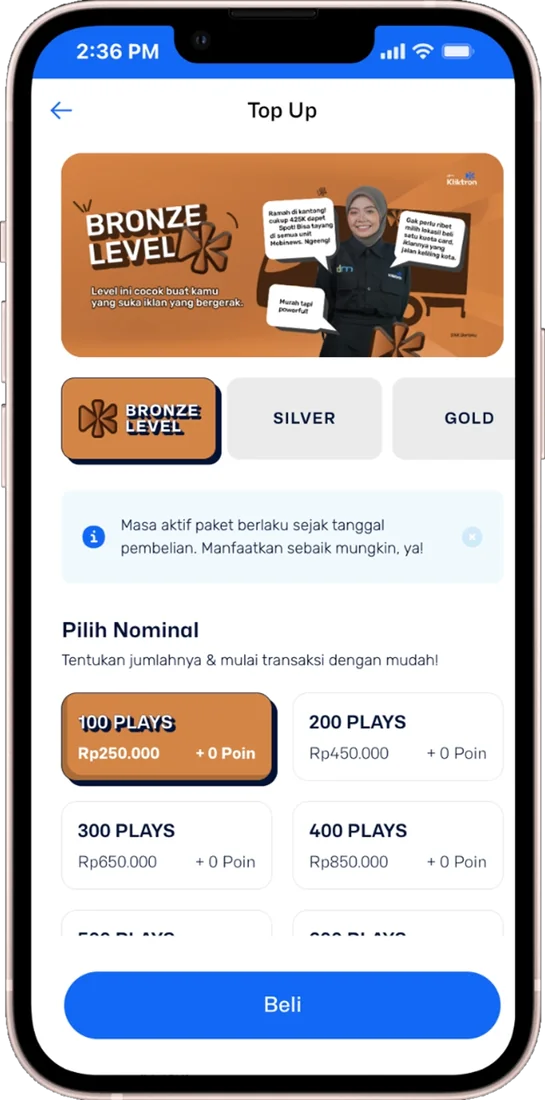
One play is one 15-second airing. Advertisers buy a Plays package in the Klik App, pick points and dates, and start without a yearly contract or a hundred-spot minimum.
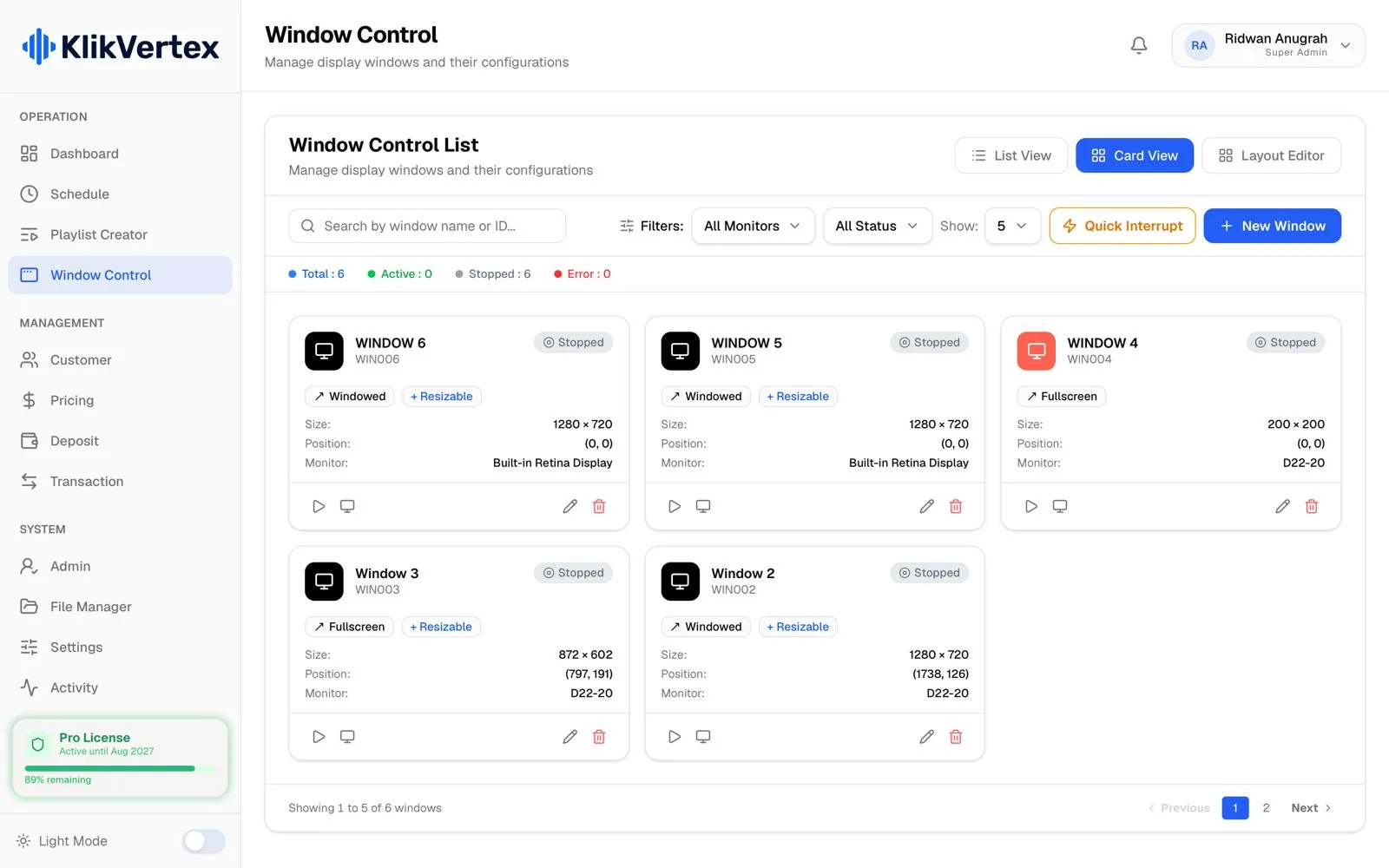
The player keeps the schedule, rates and balance on the machine beside the screen, so airing continues when the internet drops. A fleet dashboard puts failing screens on top.
Schedule, rates and balance live on the machine at the site.
Cameras count the people and vehicles that actually pass. Video is processed on site, and only the counts leave the location.
Video processed on site. Only the numbers leave.
Media owners get pricing, tiers, approvals and transactions in one place, and their idle airtime becomes retail inventory in the Klik App without a new sales team.
Many screens in the network belong to partners and operators. We run the system that sells, airs and proves the airtime on them.

The advertiser or its creative partner prepares the creative. We check it against the specification before anything airs.

Power and connectivity at the site come from the site owner. The player is built to keep airing when the line drops.
What we report is the system’s own record, not an impression or an operator’s memory.

Anyone can appear on a public screen. Entry starts at a small Plays package, with no yearly contract and no hundred-spot minimum.

One system, not a catalogue. Location, schedule, creative, payment, playback and reporting run in one flow, one account and one record.

Proof of play is written by the player and backed by a CCTV clip. The audience is counted by cameras at the point.
Order, air, prove, measure: four steps in one loop, and each side takes something home.
Follow one playBrands, businesses and individuals buy airtime that behaves like a digital channel: small to start, with proof and numbers at the end.
Price, schedule, proof and payment sit in one place, seen by the advertiser and the media owner from their own side.
Retail demand reaches the screen without a sales team, and the audience at each point becomes a number.
Media owners and partners start small, see it work on their own screens, then scale.
We show proof of play, the fleet dashboard and audience counting on live data.
Thirty days on one point, one camera or one Mōbitron route, with the scope and the measure of success agreed at the start.
Installation on site, screen mapping, prices and packages set up, and training for your operators.
The first point goes on air once proof of play and audience data are checked and running normally.
We watch device health, handle technical issues and review usage with you before the term ends. SLA follows the contract agreement.
A pilot is scoped per project. Ask for a proposal through the contact page.
 Why KliktronSix reasons the model works, and how it compares with the usual ways in.How it WorksThe Advertising Operating System (AOS) behind every play, stage by stage.RoadmapWhere the company goes next, shown as now, next and later.
 Media OwnerRun, monitor and monetise your screens: offline-first airing, a fleet dashboard and retail sales of idle airtime.

See the platform on live data in a 30-minute demo, or scope a paid pilot on one point.